
All About Nettles

In this blog post, we are going to do a deep dive into the amazing and highly versatile plant of Stinging Nettles. This plant is a foe to those who unconsciously wander through the woods and have experienced the intensity of its sting, but a dear friend to all those who know and understand the potency of its medicine.
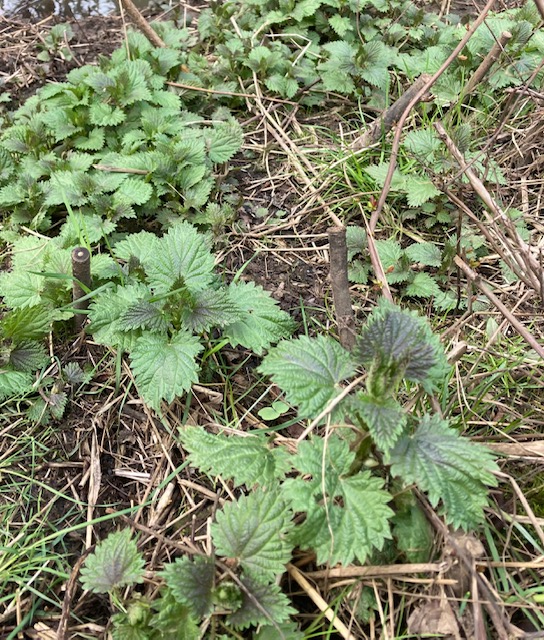
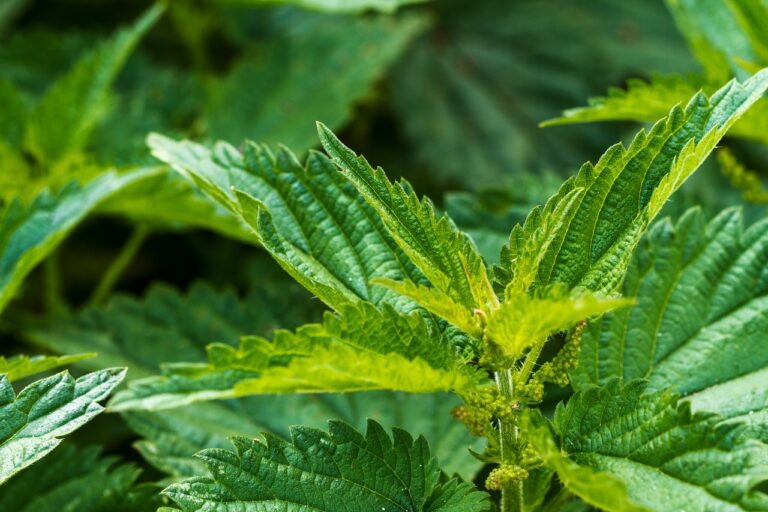
The botanical name of Nettles is Urtica dioica and is a plant that often blurs the lines of herb and food. It’s a great, broad-spectrum, introductory herb for people just starting to learn about plants given its wide range of medicinal benefits and indications for all different types of people and constitutions. This is a plant I always keep close by!
The young springtime shoots are most often used for their nutritional and medicinal properties and are the main focus of this post, but the seeds and roots are also used medicinally in their own unique ways. The seeds are best harvested in late summer and the roots in early fall. Personally, I don’t have much experience working with Nettle roots, but I look forward to working with them this fall to deepen my understanding and connection with this special plant.
Nettles have been naturalized all over the world and prefer to grow in shaded, damp, and disturbed soils, so you will often find this plant growing alongside creeks in riparian areas. As you read on, you will see that the damp environment in which Nettles prefer to grow is the same environment in the body for which Nettles are indicated, so let’s get into the 5 Keys of Nettles!
If you want to learn more about the 5 Keys framework, check out my blog post 5 Keys to Understanding a Plant before reading on.
Key #1- Taste
The two main tastes of nettles are salty and sweet. The salty flavor means a high presence of minerals and often indicates a plant’s influence on the kidneys and urinary tract, as we will see with this remedy. The sweet taste in Nettles is a bit more subtle but points to its overall nutritive quality, helping to strengthen the constitution and build up tissues and weakened organ systems due to atrophy, dryness, or malnutrition.
Key #2- Herbal Actions Actions describe how an herb alters the body’s physiology.
Diuretic– This is one of Nettle’s main herbal actions. Diuretics are herbs that drain moisture from the body on a systemic level and thereby increase the volume of fluid release. Many people think diuretics just make you pee more, and while that is true, it’s important to keep in mind the bigger picture of diuretics draining fluids from the entire body, which then leave the body via the urinary tract.
It’s interesting to note that many herbal diuretics contain high amounts of the water-soluble mineral potassium, which is excreted in large amounts when peeing. In allopathic practices of medicine, loop diuretics are often given to patients that dramatically deplete the body’s store of potassium and thus are supplemented with potassium pills. Nettles, along with many other herbal diuretics, embody the vital intelligence of Nature and naturally contain high amounts of potassium to replace and replenish what is lost through increasing urination.
Alterative– This action represents a broad category of herbs that open up the channels of elimination, alter the body’s metabolic functions, and facilitate the body’s many natural detoxification processes. Nettles are specifically working on the detoxification pathways of the blood, skin, and kidneys/ urinary tract (through its diuretic action mentioned above). This plant was traditionally used as a spring tonic to awaken the body from the wintertime blues, kick start the metabolism, and start the detoxifying process after winter which was historically a period of stagnation and inactivity.
Nettles usher in the changing of the seasons by being one of the first plants to appear in early spring and greet the body with a flush of minerals and nutrients.
While our modern lives tend to stay active, busy and on the move no matter the season, Nettles are always an effective remedy for cleansing the blood of metabolic stagnation and waste buildup, while simultaneously building and nourishing the blood through its rich mineral and nutrient profile. Over accumulation of metabolic waste products, also known as bad blood syndrome, can manifest as a variety of symptoms in the body including chronic skin conditions, swollen joints, low-grade infections, sluggish digestion, and liver toxicity.
Nutritive– Nettles are one of the most nutrient-dense plants growing in Mother Earth’s herb garden, containing large amounts of protein, minerals, and vitamins such as iron, chlorophyll, Potassium, calcium, Vitamin C, and silicic acid. This nutrient content nourishes the body on a cellular and tissue level while also building the blood in iron and aiding in protein metabolism, thus treading the line of food and medicine. Nettles can be incorporated culinarily by making pestos, soups, and stews as well as taken in tincture or infusion form.
The high chlorophyll content cools and alkalizes the tissues in the body and has an overall anti-inflammatory effect throughout the body. This nutritive aspect makes Nettles a beneficial remedy for thin, malnourished, and weakened constitutions that are lacking in vital nutrients by building and strengthening the blood and muscular tissue. These nutrients ultimately build up the tissues that make up our organs such as the nerves, bones, kidneys, uterus, cardiovascular system, and urinary tract.
Astringent– Nettles also have an astringent property worth mentioning which helps to tighten and bring tone to weak or overly lax tissues including the blood vessels, intestines, and the uterus.

Key #3- Organ Affinity Where in the body (organ systems, organs, tissues, cells, etc.) is the herb going? It’s important to keep in mind that plants can be working on many organ systems simultaneously.
The first organ affinity is the urinary tract system and kidneys via the diuretic action we discussed above. Nettle seeds have a particular affinity for the kidneys as a trophorestorative and are used when there is kidney damage, failure, or other problems in the overall function of the kidneys. It should be noted that any kind of kidney damage should be taken seriously and examined by a medical doctor, but Nettle seeds can be a beneficial way to add extra support.
Nettles are also working on the circulatory system by cleansing and purifying the blood while simultaneously building and nourishing it. Nettles also help to tighten and astringe the walls of the arteries and veins. Imagine tightening a riverbank so the water can flow swiftly and properly instead of congealing, pooling, or stagnating which can lead to a build-up of metabolic waste products.
Through its high mineral content, nettles also have an affinity for the musculoskeletal system and connective tissue.
Nettles are also working on the liver by assisting with protein metabolism and general detox/ liver health.
This plant also has an affinity for the uterus by helping to tonify and astringe it.
The roots have a strong affinity for the prostate gland by helping to improve urine flow and reduce BPH (benign prostatic hyperplasia) and inflammation.

Key #4- Energetics
When we talk about energetics, we are referring to the 3 qualities of temperature, moisture, and tone that a plant creates in a human landscape. Remember that each of these qualities exist on a spectrum from hot to cold, moist to dry, and tonifying to relaxing.
The temperature of nettles has an overall cooling effect on the body through its alkalizing and inflammation-modulating minerals and compounds such as chlorophyll, flavonoids, and phenolic acids. This plant is often indicated when there are inflamed and hot tissues that are also swollen with fluids such as arthritis, edema, or seasonal allergies.
On the moisture spectrum, Nettles have a drying effect through the diuretic and astringent actions that help to drain excess fluids from the tissues. This could be anything from nasal congestion during allergy season, edema, or metabolic waste buildup and stagnation in the blood.
Lastly, Nettles are tonifying through their astringent action and help with tissues that have become weak, flaccid, and need more structural integrity. Nettles help to stimulate and restore vitality to under-functioning organs and tissues.

Key #5- Preparations
Nettles are best prepared using vinegar, water, or alcohol, with each solvent extracting different constituents found in the plant.
Vinegar is best used to extract minerals in a plant, so naturally vinegar works well with Nettles. It is best to use fresh plant material for this preparation, and I personally love to use nettles infused in apple cider vinegar as a salad dressing or take 1 tablespoon up to 3 times per day as a mineral-rich tonic. You can also use nettles-infused vinegar as a hair wash.
Water is another effective way to extract the mineral content, and you can make an infusion with fresh or dried leaves for a nourishing, mineral-rich tea. The dried leaves start to lose their medicinal potency after a year give or take, so try to use them within that time frame! I always do a big nettles harvest each spring that lasts me through the summer, fall, and winter. The dosage for an infusion or decoction is 1-2 tbsp. per 8 oz of water. You can also add Nettles to soups or culinary dishes to enhance the nutrient profile.
For a nettles tincture, the fresh plant material is best to use as it contains the formic acid crystals which are most effective at treating the hot, irritated, and inflamed tissues that Nettles so beautifully cool and soothe. The dosage can vary quite a bit, but 1 teaspoon up to 3 times per day should yield results.
Powdering nettles is another great preparation of this plant, especially for its nutritive tonic properties. You can remove the leaves from the stems and grind them in a blender or coffee grinder. You can add them to smoothies, hot water, or take them in capsules with a dosage of 1 tbsp. up to 3 times a day.
And there we have our 5 keys of Nettles! Hopefully this offers you a deeper understanding of this incredible plant and all the ways Nettles works in the body beyond treating superficial symptoms.
Comment below if you have any experiences with using nettles, or if you got any inspiration in this blog post to use nettles in a new way!